
Corporate Interpreter Services for Seminars
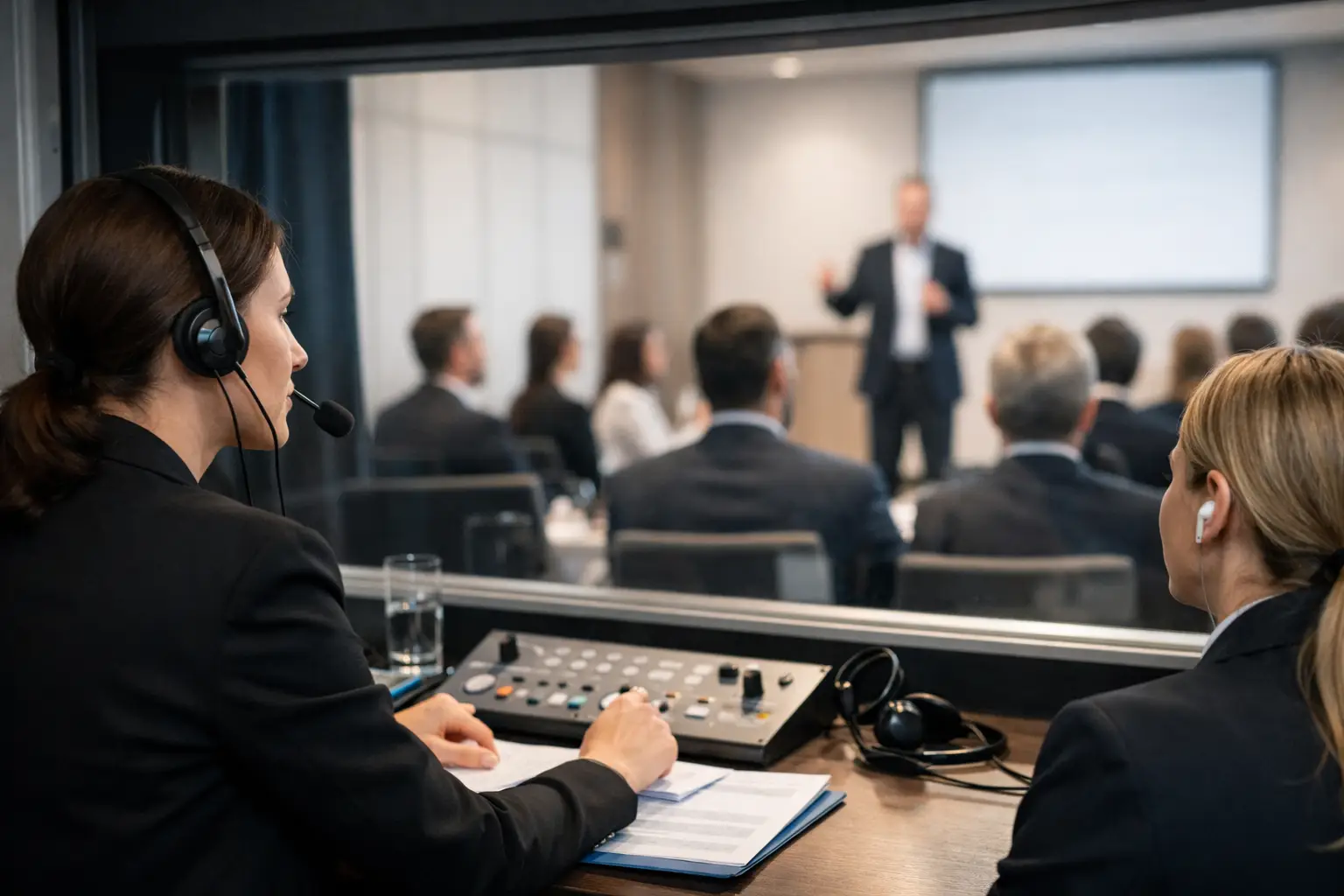
A regional compliance seminar goes off track faster than most teams expect. The slides are approved, the speakers are briefed, and the room is full – then half the audience starts missing key points because technical terms, legal nuance, or fast-paced discussion are not landing equally across languages. That is where corporate interpreter services for seminars stop being a nice-to-have and become part of event risk management.
For enterprise teams, seminars are rarely just presentations. They are used to align regional offices, train distributors, brief partners, support product launches, explain policy changes, and handle regulated content that cannot be misunderstood. If even one audience segment leaves with partial understanding, the business cost can show up later in poor adoption, weak compliance, rework, or damaged stakeholder confidence.
Why corporate interpreter services for seminars matter
The core value of interpretation is clarity under pressure. In a corporate seminar, speakers often move through dense material quickly. They may switch between strategy, operations, data, and Q&A without much pause. A bilingual employee or ad hoc language support arrangement usually cannot keep up with that pace, especially when the content includes industry terminology or market-specific references.
Professional corporate interpreter services for seminars are designed for this exact setting. The goal is not only language conversion. The goal is to preserve meaning, intent, tone, and precision while the event is happening. That distinction matters in board briefings, investor-facing sessions, technical seminars, and internal workforce communications where wording influences decisions.
There is also a consistency issue. Large organizations need every participant to receive the same message, not different versions of it. A managed interpreting setup helps control terminology, speaker flow, and audience experience across sessions and languages. For companies operating across Singapore, Hong Kong, Bangkok, or Jakarta, that consistency can support regional execution far beyond the seminar itself.
What good interpreting looks like in a seminar setting
The best interpreting is almost invisible to the audience because it feels natural. Attendees stay focused on the content, not on the mechanics of language support. But that outcome requires planning.
First, the interpreters need relevant domain knowledge. A seminar on pharmacovigilance, cybersecurity, cross-border tax policy, or automotive manufacturing will not succeed with a generalist who lacks familiarity with the subject. Industry fluency reduces hesitation, improves terminology choices, and protects speaker intent.
Second, the interpreting mode has to fit the event format. Simultaneous interpreting is often the right choice for larger seminars because it allows the speaker to continue without interruption. It works well for executive presentations, conference-style programs, and multilingual audiences that need real-time access. Consecutive interpreting may suit smaller leadership sessions, workshops, or bilateral discussions where pacing is slower and interaction is more deliberate. Neither is universally better. It depends on audience size, content density, timing, and budget.
Third, preparation quality shapes live performance. Strong providers request agendas, slides, glossaries, speaker notes, and acronyms in advance. They ask about audience profiles and sensitive terminology. This preparation is not administrative overhead. It is part of quality assurance.
The hidden risks of underestimating seminar interpretation
Many seminar organizers think about interpreting too late. They secure the venue, finalize the program, and confirm speakers before evaluating how multilingual attendees will actually experience the event. By then, important options may be limited.
One common risk is using internal staff as interpreters. Even highly capable bilingual employees usually have another role to perform at the event. Asking them to interpret complex material in real time can compromise both tasks. It can also create confidentiality concerns, especially in HR, finance, legal, or M&A-related seminars.
Another risk is choosing providers on language coverage alone. Broad language availability is useful, but enterprise buyers also need operational discipline. That includes interpreter briefing, terminology management, equipment coordination, backup planning, and clear accountability. A missed handoff between event production and language support can disrupt the entire room.
There is also a reputational dimension. External guests, partners, and regional teams notice when multilingual events feel improvised. Poor audio, inconsistent terminology, and delayed interpretation suggest weak execution. For customer-facing or leadership-led seminars, that impression can undercut the message itself.
How to evaluate corporate interpreter services for seminars
For procurement, HR, L&D, communications, and event teams, vendor selection should go beyond rate cards. The practical question is whether the provider can support business-critical communication at enterprise standard.
Start with subject-matter fit. Ask whether interpreters have experience in your industry and in similar seminar formats. A provider serving banking, healthcare, life sciences, government, manufacturing, or technology clients should be able to explain how they handle terminology-heavy sessions and regulated content.
Then look at delivery management. Interpreting quality is tied to project management more than many buyers realize. You want a partner that can manage scheduling, replacements, briefing materials, technical checks, and stakeholder communication without creating more work for your internal team. This is especially relevant for regional organizations running repeat seminars or multi-market programs.
Quality controls matter too. Ask how interpreter selection is handled, how glossaries are developed, and what happens if a speaker changes content at the last minute. If the seminar includes remote participants or a hybrid audience, ask how the provider manages platform compatibility, audio routing, latency, and contingency support.
Certifications and service discipline are not just marketing claims in this category. They indicate whether the provider is structured for repeatable delivery. Enterprise clients often prefer partners with formal quality management processes because language work at scale needs consistency, documentation, and accountability.
When simultaneous interpreting is the better investment
Simultaneous interpreting typically requires more planning and equipment, but it often delivers stronger business value for seminars with larger or mixed-language audiences. Because interpretation happens in real time, the session keeps its pace. Speakers remain more confident, the agenda stays on schedule, and attendees can engage without feeling like they are in a secondary track.
This matters in executive roadshows, regional training seminars, annual kickoffs, and market briefings where timing and audience energy are tightly managed. It is also useful when several nationalities are present and no single working language serves the room equally well.
The trade-off is cost and logistics. Simultaneous interpreting may involve booths, receivers, headsets, platform integration, and interpreter pairing for longer sessions. But for high-stakes seminars, that investment often protects the larger event budget by improving comprehension and participation.
Why preparation determines outcomes
The strongest seminars are rarely the ones with the most elaborate production. They are the ones where every communication layer is aligned before the event starts.
That means interpreters should receive final materials early enough to study speaker intent, product names, technical phrases, and internal terminology. If executives use company-specific shorthand, that should be clarified beforehand. If a session includes legal disclaimers, financial statements, or policy language, accuracy standards should be explicit.
It also helps to brief speakers. Fast delivery, reading directly from dense slides, or changing direction without warning can challenge even experienced interpreters. A short speaker orientation often improves the experience for everyone in the room.
For recurring seminar programs, terminology management becomes even more valuable. Standardizing key terms across sessions helps protect brand consistency and reduces confusion for employees and partners in different markets. This is one area where a broader language services partner can add value beyond the event itself.
A better standard for multilingual seminars
Enterprise seminars deserve the same operational rigor as any other business-critical function. Language support should not be treated as a final add-on after content, logistics, and audience strategy are already set. It is part of how the event delivers measurable outcomes.
Organizations that handle multilingual seminars well tend to think beyond the live session. They consider how interpretation supports training retention, leadership alignment, compliance understanding, and regional execution. They also choose partners that can combine language expertise, managed delivery, and business context at scale. For companies working across multiple markets and functions, that model is more sustainable than arranging language support one event at a time.
Verztec’s approach reflects that enterprise expectation by combining experienced interpreters, disciplined project management, and multilingual capability across more than 100 languages. For organizations running seminars where accuracy, confidentiality, and audience engagement all matter at once, that combination is often what turns a multilingual event from workable into effective.
If your next seminar carries strategic, regulatory, or operational weight, the right interpreting support does more than help people follow along. It helps every audience hear the same message clearly enough to act on it.