
How Accurate Is AI Translation, Really?
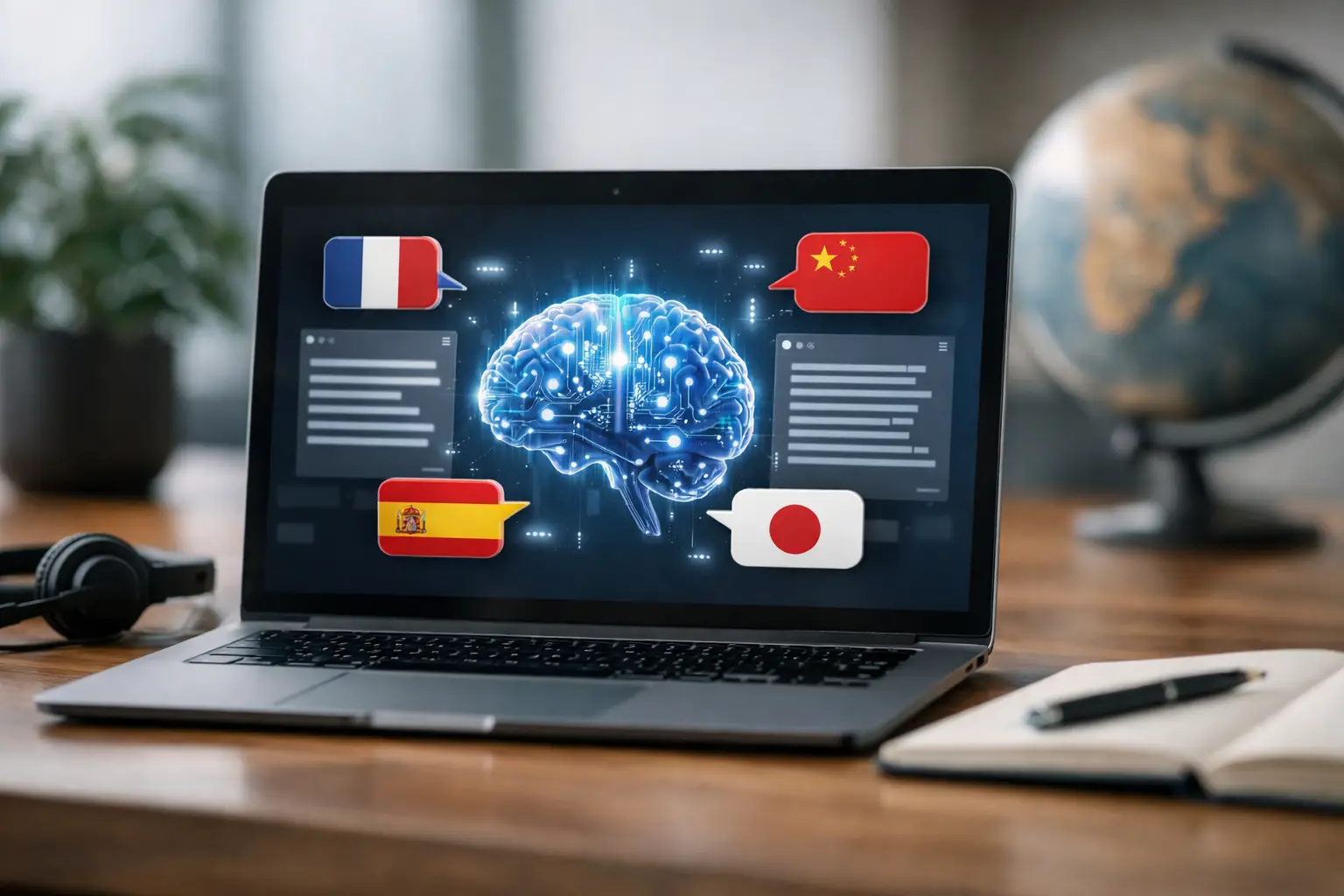
A product launch goes live in six markets, and the English tagline that tested well suddenly reads awkwardly in Japanese, overly casual in German, and legally risky in French. That is usually the moment stakeholders stop asking whether AI is fast and start asking how accurate is AI translation in real business conditions.
The short answer is this: AI translation can be highly accurate for straightforward, high-volume content, but its reliability drops when context, brand nuance, compliance, or industry-specific terminology matter. For enterprise teams, accuracy is not a single score. It is a business risk question tied to audience, content type, and the cost of getting meaning wrong.
How accurate is AI translation for business content?
AI translation has improved dramatically in the last few years. For common language pairs and general content, modern engines can produce usable first drafts in seconds. Internal emails, knowledge base articles, product descriptions, and routine support content often translate well enough to accelerate workflows and reduce turnaround times.
But business content rarely lives in a vacuum. A sentence can be grammatically correct and still fail operationally. It may miss the intended tone, use the wrong industry term, weaken a legal disclaimer, or misread who is doing what in the sentence. For companies working across regulated sectors, multilingual workforces, or customer-facing channels, those are not minor issues.
That is why enterprise buyers should evaluate AI translation on two levels. The first is linguistic accuracy: does the output preserve meaning, grammar, and readability? The second is business accuracy: does the translation support the intended action, comply with requirements, and reflect the brand correctly in market?
Where AI translation performs well
AI translation is strongest when the source content is clear, standardized, and not heavily dependent on cultural nuance. Operational documents with repetitive phrasing are a good example. User manuals, onboarding instructions, internal policy updates, and product catalogs often respond well to AI-assisted workflows because terminology can be controlled and structure is predictable.
It also performs better when companies already have mature language assets. A clean source text, approved termbase, translation memory, and style guidance give AI systems more stable input and make post-editing faster. In other words, translation quality often starts before translation itself. Poor source writing creates poor output, whether the first draft is generated by a machine or a human.
For large organizations managing recurring multilingual updates, this matters. AI can reduce costs and compress timelines significantly when content is high volume, multilingual, and relatively low risk. Used correctly, it becomes a productivity layer rather than a quality shortcut.
Where AI translation still falls short
The biggest weakness of AI translation is not always obvious error. It is misplaced confidence. Output can sound fluent while subtly changing meaning.
This shows up in marketing and brand messaging first. Slogans, campaign copy, employer branding, and executive communications depend on tone, implication, and cultural resonance. AI may translate the words but miss the emotional intent. A phrase meant to sound premium can become stiff. A message meant to build trust can become too direct or too vague for the local audience.
Highly regulated content is another pressure point. In healthcare, life sciences, finance, government, and legal-adjacent communications, a small wording shift can create compliance exposure. Dosage instructions, policy language, product claims, safety notices, and consent materials require more than fluency. They require precision, traceability, and subject-matter judgment.
Multilingual training content also deserves caution. If an employee misunderstands a safety procedure, software process, or compliance module because a translated instruction is ambiguous, the cost is not editorial. It is operational. This is especially relevant for regional organizations scaling training across Singapore, Bangkok, Jakarta, or Hong Kong, where workforce capability depends on consistency across languages.
The factors that actually determine AI translation accuracy
If you are assessing how accurate is AI translation for your organization, the answer depends on several variables working together.
Language pair matters. AI performs better in widely used language pairs with large training datasets than in lower-resource combinations. English to Spanish will typically outperform English to Burmese or highly specialized regional variants.
Domain matters just as much. General AI engines are not automatically reliable in aerospace, pharmaceuticals, medical devices, or banking. Technical terminology, abbreviations, and regulated phrasing require domain adaptation and expert review.
Source quality is a major driver. Ambiguous English creates ambiguous output. Long sentences, inconsistent terminology, idioms, and poor writing reduce machine accuracy quickly.
Content purpose matters too. A rough internal draft may be acceptable for information access. A customer contract, investor presentation, or product packaging is a very different standard.
Finally, review workflow matters. AI translation used alone is one thing. AI translation followed by trained linguists, quality assurance checks, and terminology control is another. Most enterprise-grade success comes from the second model, not the first.
AI-only vs. human-perfected translation
This is where many businesses make the wrong comparison. The real choice is rarely AI or human. It is usually raw AI output versus AI-powered and human-perfected translation.
Raw AI is fast and inexpensive, but it shifts quality risk to your internal team. Someone still needs to catch errors, standardize terminology, and verify tone. If that burden lands on marketing managers, HR leads, or in-country staff without formal linguistic training, the process may look efficient while introducing hidden delays and inconsistent quality.
A managed hybrid model is different. AI handles speed and scale. Native-language specialists refine meaning, terminology, and tone. Quality teams enforce consistency across markets and content types. That structure is better aligned with how enterprise communication actually works, especially when content moves through multiple departments and regions.
For organizations that need repeatable multilingual delivery, this approach is often the practical middle ground. It captures automation gains without treating language quality as optional.
How to judge whether AI translation is accurate enough
The right benchmark is not whether a translation looks readable to a bilingual employee. It is whether the output is fit for purpose.
A useful test starts with three questions. What happens if this translation is wrong? Who will read it? And does this content carry regulatory, reputational, or revenue impact?
If the downside is low, AI-first may be perfectly reasonable. If the content affects compliance, brand trust, learning outcomes, or contractual interpretation, quality thresholds should be much higher.
It also helps to measure performance with actual business criteria, not vague impressions. Look at terminology consistency, revision rates, in-market stakeholder feedback, turnaround time, and error severity. Compare AI-only output with human-reviewed output on the same content set. Many enterprise teams find that the issue is not whether AI can translate, but whether it can translate well enough without creating downstream rework.
A practical framework for enterprise teams
For most organizations, the best policy is not to approve or reject AI translation outright. It is to route content by risk.
Low-risk, repetitive, high-volume material can move through AI-assisted workflows with light review. Mid-risk content such as internal communications, training updates, or product support materials may require bilingual editing and terminology checks. High-risk content such as legal, regulated, investor-facing, executive, or brand-critical material should go through specialist linguists and formal quality control.
This framework gives procurement, localization, HR, and communications teams a clearer operating model. It also prevents the common mistake of applying one translation standard to every content type.
Providers matter here. Enterprise buyers should look for process maturity, language coverage, confidentiality controls, quality standards, and the ability to combine technology with managed delivery. Verztec, for example, positions this hybrid model around scalable multilingual execution, native-language expertise, and disciplined project management for business-critical use cases.
So, how accurate is AI translation?
Accurate enough to be valuable, not accurate enough to be left alone.
That is the most honest answer. AI translation is a powerful tool for scale, speed, and cost efficiency. It can handle a significant share of multilingual business content when deployed with the right inputs and safeguards. But it is not a substitute for judgment, especially where nuance, compliance, training effectiveness, or brand credibility are on the line.
The stronger question for enterprise teams is not whether to use AI translation. It is where to use it, how to govern it, and when to add human expertise so the final output performs in market, in operations, and under scrutiny.
If your business communicates across languages, accuracy should be defined by outcome, not just output. The translation is only successful when the audience understands it exactly as intended.